
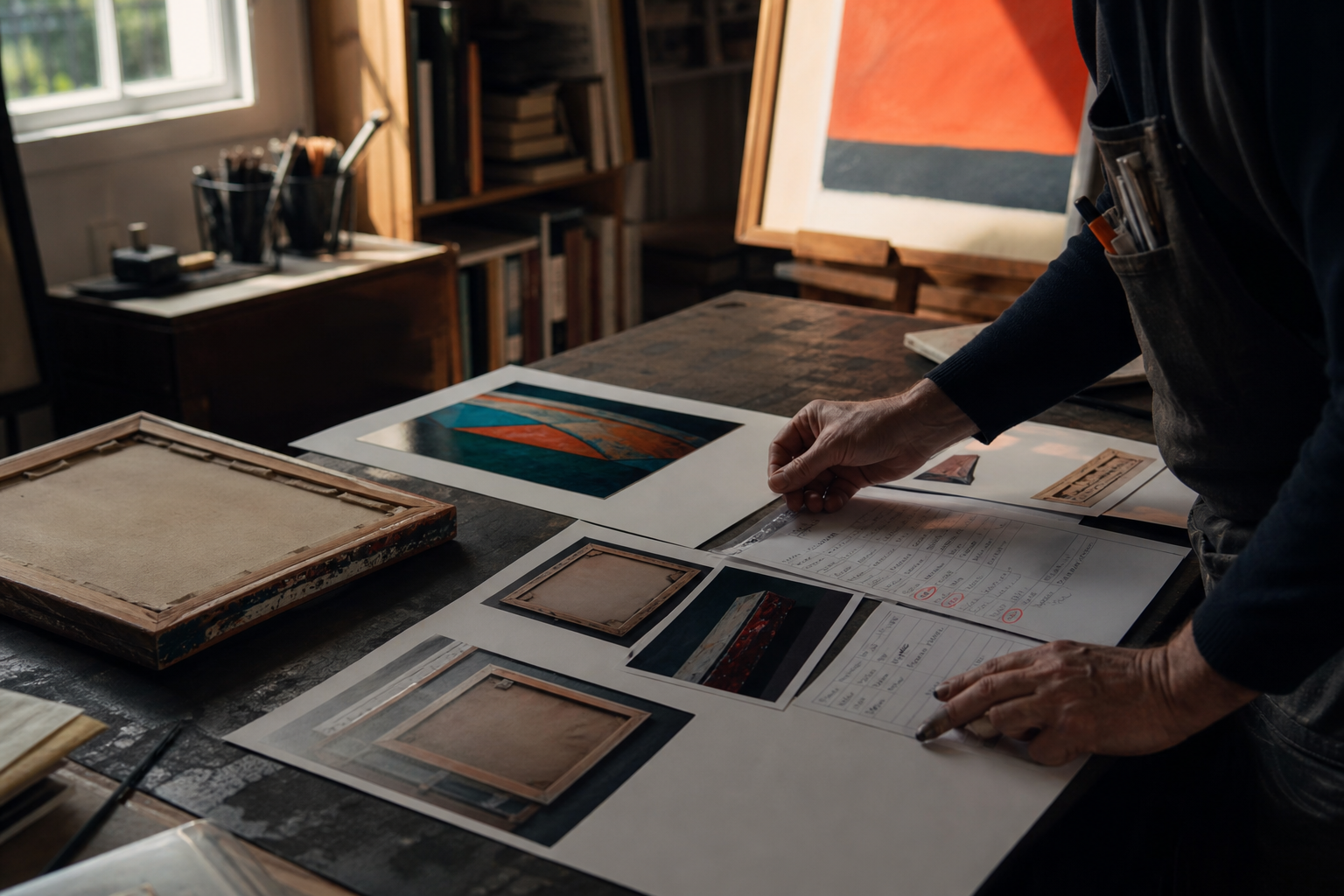
An AI cannot give useful purchase guidance from a title, price, and attractive photograph. Give it twelve specific facts: the listing URL; artist identity; exact object description; current object-specific photographs; seller identity and authority; asking price and every additional cost; price comparisons with source type; condition information; provenance and document claims; payment instructions; delivery and risk terms; and return, inspection, or claim rights. Then ask it to separate supported facts, seller assertions, conflicts, missing evidence, and next questions. Even with all twelve, an AI should not authenticate the physical object, inspect condition, produce an appraisal, verify legal title, or predict future value.
The twelve facts
- Listing URL and capture date. Save the page because listings change. 2. Artist’s full name, official site, location, and any identity ambiguity. 3. Title, date, medium, dimensions, edition, signature, frame, and current location. 4. Front, back, edges, signature, labels, frame, and condition photographs that show this object—not only a room mockup.
- Seller’s legal name, role, contact information, and authority to sell. 6. Asking price plus tax, premium, packing, shipping, insurance, customs, framing, and installation. 7. Comparison links labeled as seller listings, third-party listings, asking prices, reported sales, or estimates. 8. A condition statement or report, including who prepared it and whether they inspected the work.
- Invoice, certificate, provenance, authenticity, and copyright claims, with the issuer of each document. 10. Payment method, beneficiary, account-change history, deposit, and timing. 11. Who packs, ships, insures, bears risk, and accepts the object. 12. Return, cancellation, inspection, damage-claim, and dispute terms.
Ask for an evidence map, not a verdict
A better prompt is: ‘Using only the linked evidence, list what is supported, what is asserted by the seller or artist, what conflicts, what remains unknown, and the five questions I should resolve before paying.’ That instruction makes the classification visible. It is far safer than ‘Would you buy this?’
Ask the system to quote or cite the page supporting each consequential claim. If it cannot link the price, condition, seller identity, or document promise to a source, treat the output as an unverified lead.
Do not confuse public research with object inspection
A coherent artist website can support identity and professional activity. It cannot prove that the delivered canvas is the same one pictured online. A certificate can preserve an issuer’s assertion. It does not become independent evidence merely because an AI summarizes it confidently. Review before collapsing those records into one idea.
Sources
- Museum Handbook, Part II: Museum RecordsNational Park Service
- A Guide to Provenance Research at the Archives of American ArtSmithsonian Archives of American Art
- Condition ReportsChristie's
- A Way to Spot Scams: How Someone Asks You to PayFederal Trade Commission
- Business Email CompromiseFederal Bureau of Investigation