
Begin with the offer in front of you
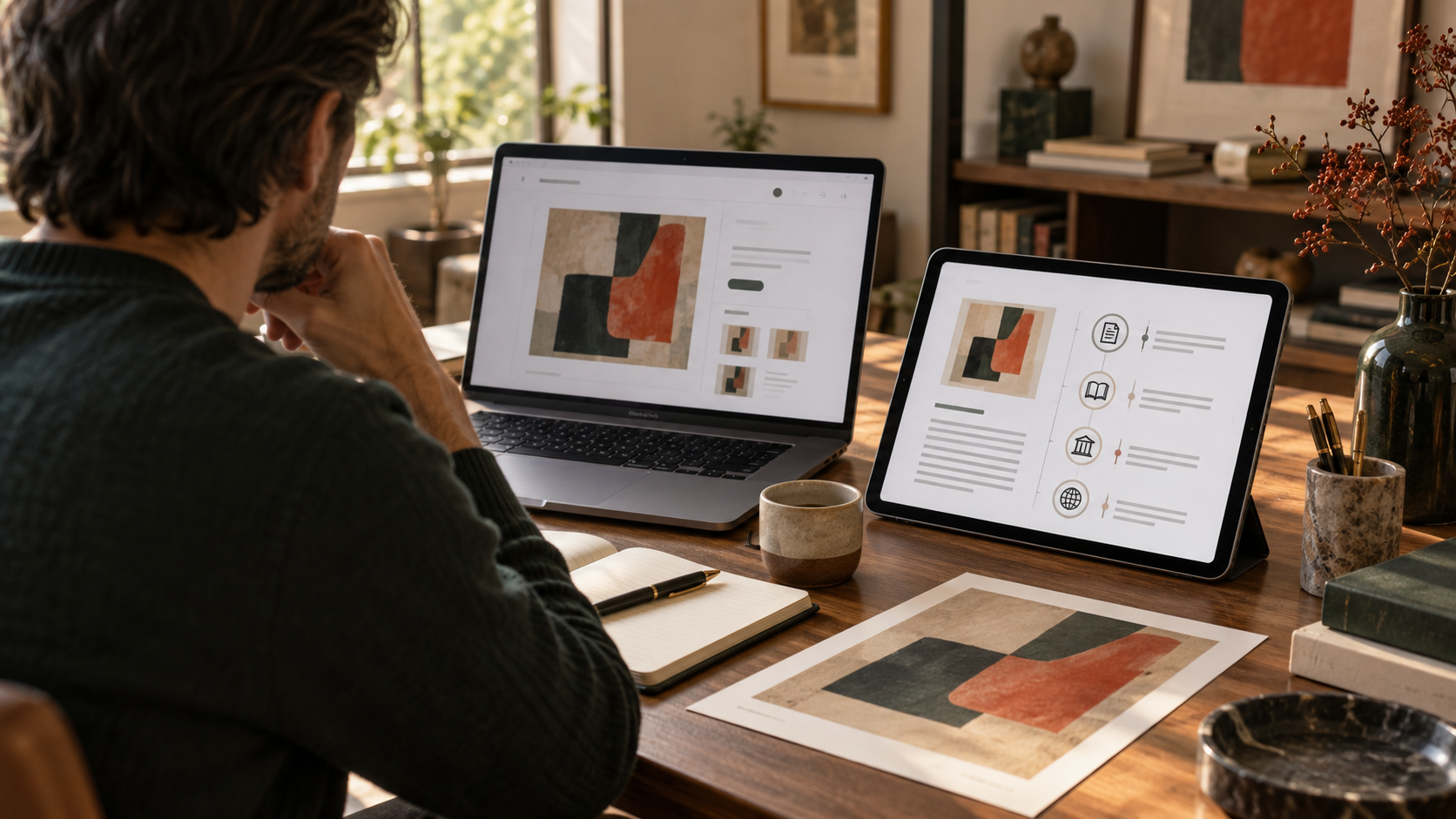
The Artwork Research page begins with a listing URL because a collector is usually considering a particular offer, not researching an artist in the abstract. A listing identifies what the seller says is available: a work, its stated details, a price and a transaction partner. If the page cannot be retrieved safely, the product offers manual entry rather than guessing what the page says. That keeps the research attached to the object the buyer is actually considering.
The URL is a starting point, not an answer. Artist biographies, museum collection records, edition publications, seller information and comparable public offers may each answer a different part of the question. The CollectRight methodology asks who made each claim, what role a source plays and whether its evidence concerns the artist, seller or offered object. It also separates asking prices from completed transactions.
Make the research readable
The result is a private report organized for decisions. In the sample report, the opening snapshot orients the reader, then individual cards let them examine findings in more detail. The underlying source links stay attached to the claims they support. A buyer can read one card at a time or open more of the report when they want the broader picture.
That organization is useful because the public record is uneven. An artist’s institutional history may be well documented while the exact copy number or current condition of a work is not. The report should show both facts without allowing the stronger artist record to stand in for an inspection of the particular object. A missing public record is a question to pursue, not proof that a document does not exist.
Take the next step with the seller
Sources
- CollectRight Artwork ResearchCollectRight
- CollectRight MethodologyCollectRight
- CollectRight Sample Artwork Research ReportCollectRight