
Geoffrey Holder’s Paintings Take Center Stage at MOCA North Miami
Three works offer a way into Black Magic, a survey of the artist’s lifelong attention to bodies, memory and color.
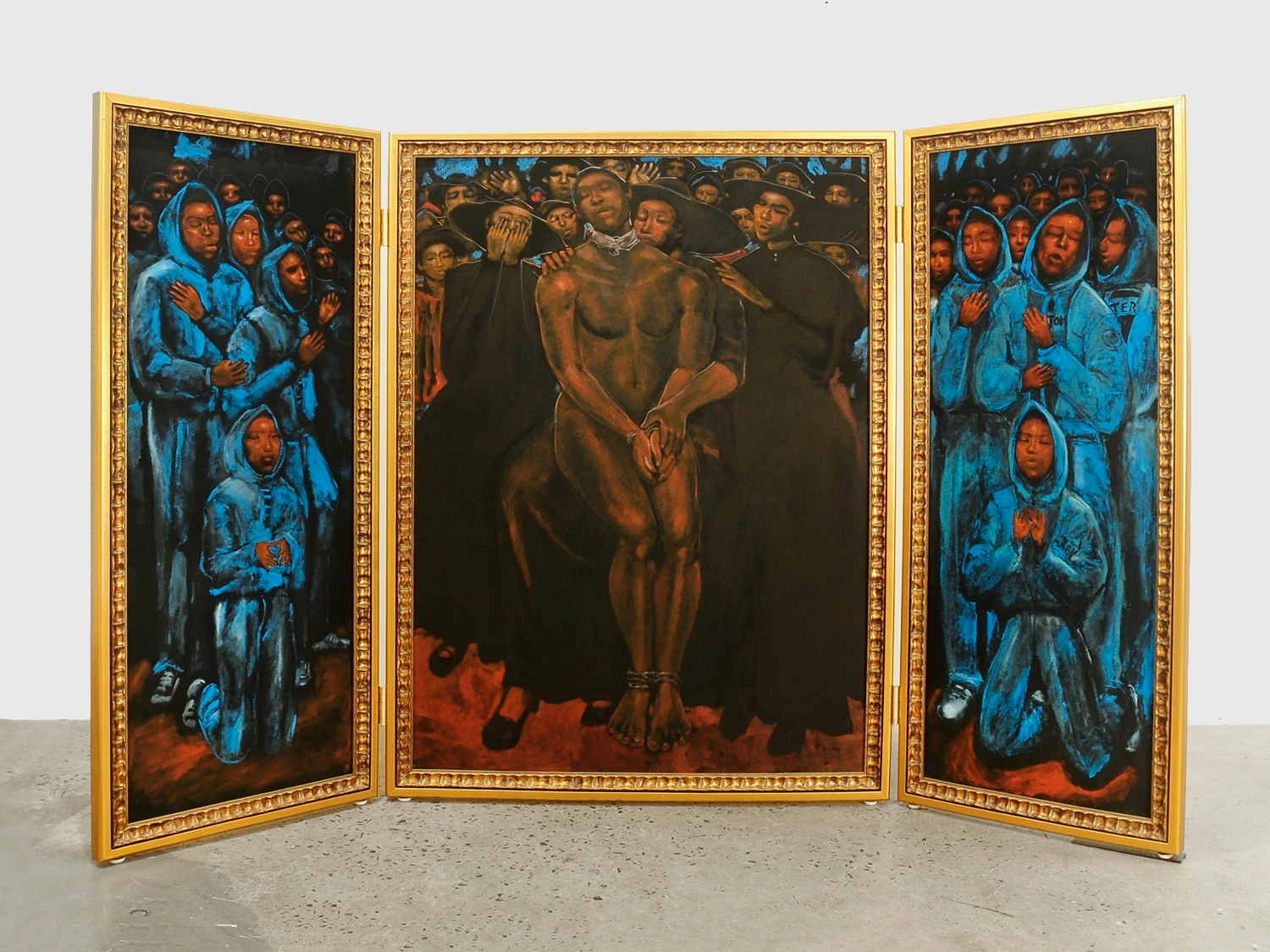
A bound figure stands at the center of Geoffrey Holder’s Pieta 2, surrounded by a crowd. Figures in blue fill the side panels. The gold frame divides the scene, but the bodies pull it together.
It is one of three works reproduced here from MOCA North Miami’s press materials for Geoffrey Holder: Black Magic, opening Nov. 18. The museum calls it his first major museum survey. Running through April 4, 2027, the exhibition is curated by Erica Moiah James and includes more than 60 works, many previously unseen by the public.
More than a likeness
In Portrait of Carmen (1980), a long black dress meets a vivid red background. Her head tilts slightly; one arm falls along the dress. The setting is spare, leaving posture and color to do the work.
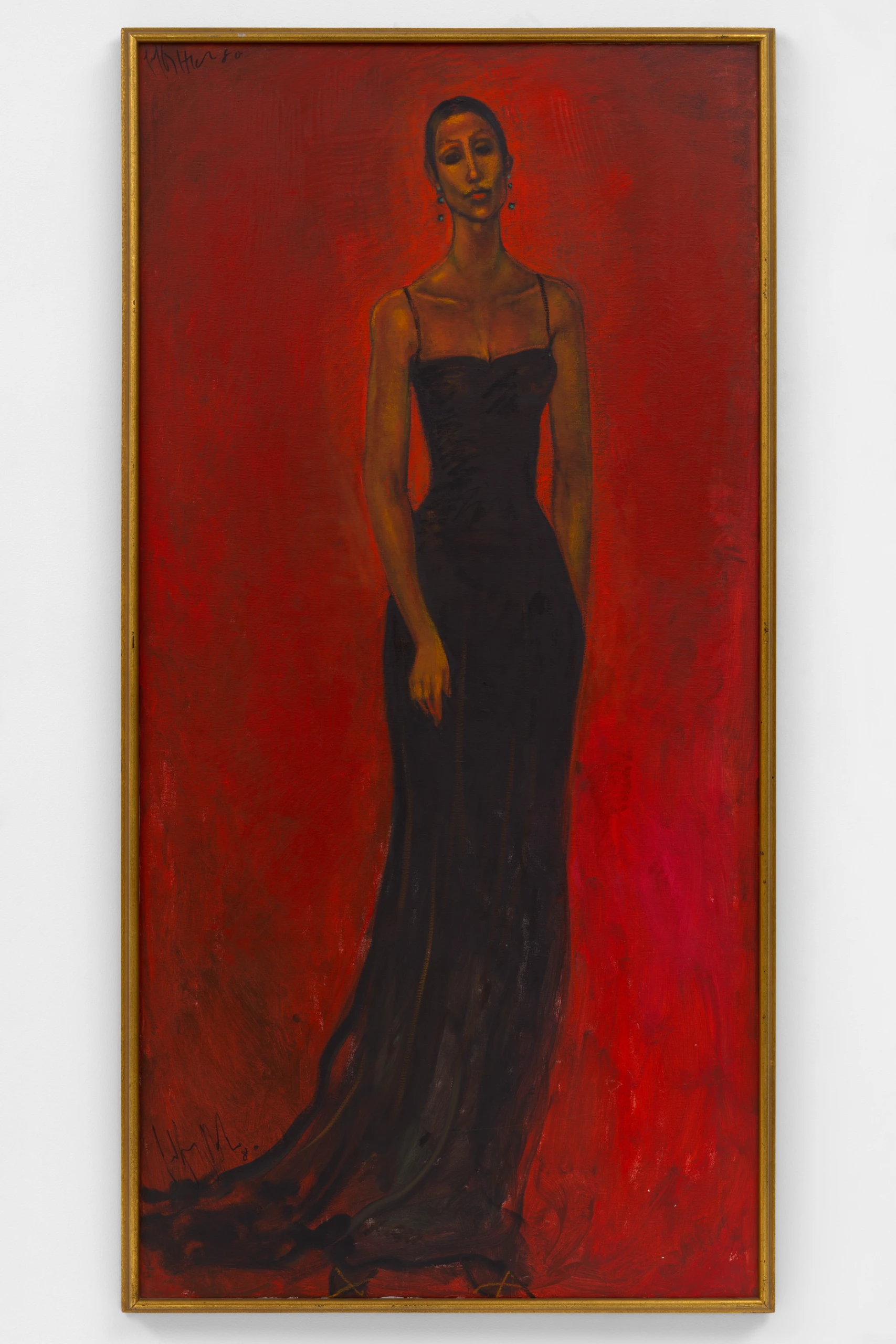
The text for Holder’s 2024 James Fuentes exhibition, also curated by James, describes how Carmen de Lavallade’s features and bearing entered his memory, informing both portraits of her and other figures. A familiar body could become the starting point for an invented one. Writing about the brothers’ 2024 London exhibition, Culture Type’s Victoria L. Valentine draws a telling contrast: Boscoe generally painted sitters, while Geoffrey drew on recollection and invention.
Painting was not a late sideline. Holder had a New York solo exhibition at Barone Gallery in January 1954 and received a Guggenheim Fellowship in painting in 1956. Those dates give the work a history beyond his fame on stage and screen.
Before the dance
In Waiting for the Dance (2001), seated figures gather close together. Yellow and red dresses emerge from a dark crowd, while bright lines pick out shoes and fabric. The title promises movement; the painting holds everyone still.
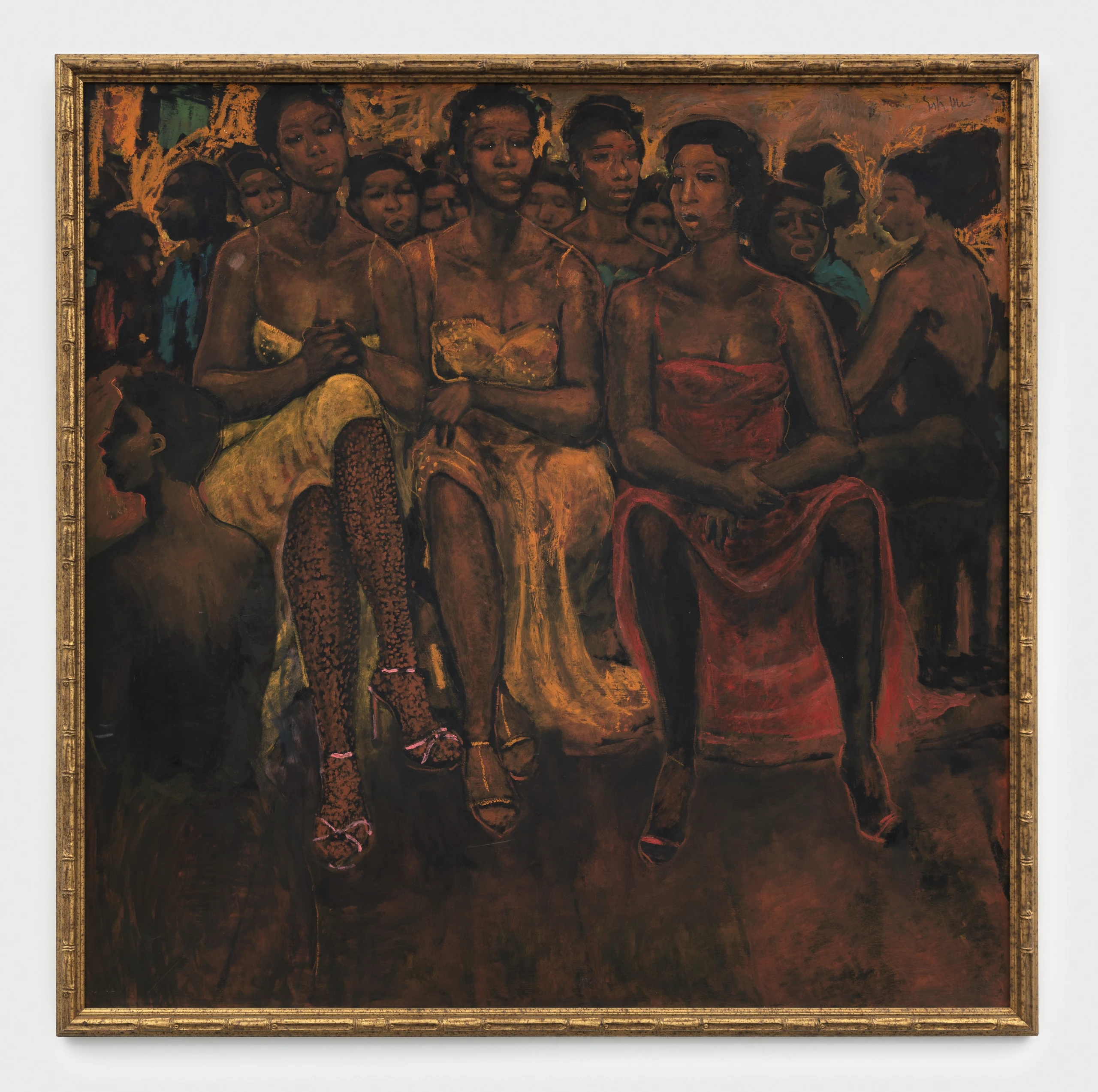
The supplied caption lists oil, pastel crayon and China marker on Masonite. That mix makes a useful looking exercise: follow the drawn marks as well as the painted bodies. Beside the oil-on-canvas Portrait of Carmen, it also shows why materials deserve attention alongside subject matter.
For anyone considering a work for sale, the same habit carries over: start with the particular object, its stated medium, date and documented history. CollectRight’s artwork research brings together public sources about an offered work, its artist and seller, with gaps made visible. It is a starting point for questions, not an authentication.