
Preserve the starting point
The Artwork Research service is built around a specific listing. It researches the artist, artwork and seller, then brings public evidence and its limits into a private report. The site says a collector keeps the brief whether or not they buy the work. That is useful for a short list, but it can become especially valuable when one work is purchased: it records the offer and the questions that existed before the sale.
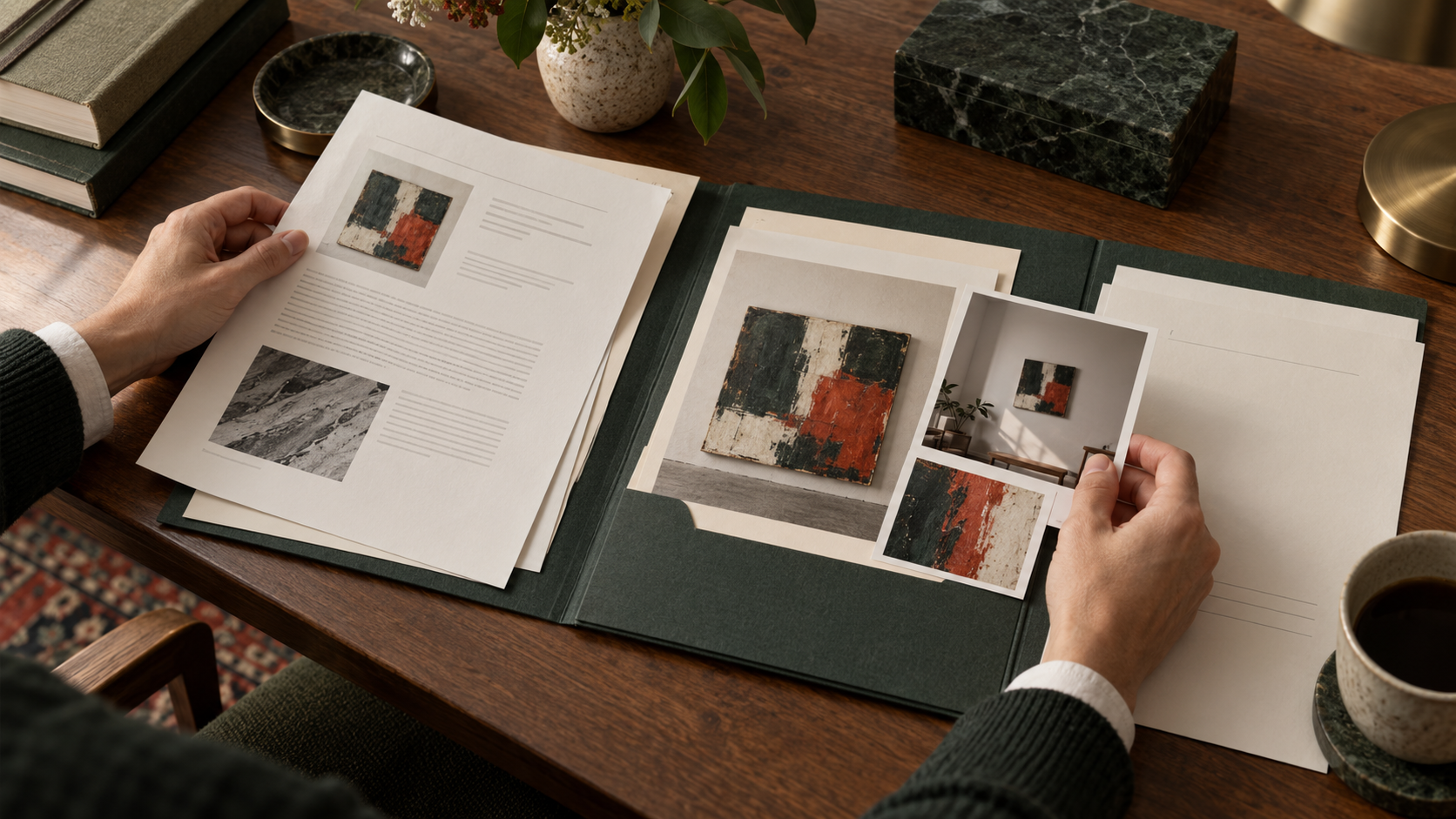
The sample report shows why that record should not be isolated from the rest of the purchase file. Some findings concern an edition or artist; others identify details about the particular object that the public record did not establish. The invoice, certificate, condition account and photographs supplied later may answer some of those questions. Keep the report and those later documents together, with dates, rather than allowing a later answer to erase the earlier uncertainty.
Make a small addendum for the actual work
Once the work arrives, record its identifying details as delivered: dimensions, copy number if applicable, inscriptions, frame or mount, and any accessories or installation components. Photograph the front and reverse where safe. Preserve the seller’s written answers and shipping or installation paperwork. If a qualified conservator or other specialist inspects it, file that report separately with the examiner’s name and date.
The CollectRight methodology distinguishes public-web research from physical inspection and artist-level evidence from object-level evidence. That boundary remains true after a purchase. A later condition report can add new knowledge about the individual work; it does not retroactively turn an earlier public source into an inspection. Conversely, the public research may preserve links to catalogues and institutional records that a future owner would otherwise have to rediscover.
Sources
- CollectRight Artwork ResearchCollectRight
- CollectRight Sample Artwork Research ReportCollectRight
- CollectRight MethodologyCollectRight