
“Outdoor” describes a setting, not a guarantee
A bronze sculpture may be cast for a garden, but it is still part of a changing environment. Rain reaches joints and recesses; salts and pollutants react with its surface; people touch, climb or collide with it. The Canadian Conservation Institute's guide to outdoor objects distinguishes works made to withstand outdoor conditions from objects displayed outside despite greater sensitivity. Both groups require vigilance, though their maintenance needs differ.
The setting begins at the base. Drainage, landscaping, nearby trees, public circulation and access for maintenance can all change the risks. CCI advises assessing wind, water, pollutants, physical access, grounds equipment and security before installation. It treats plinths, brackets and armatures as part of the assembly, not as invisible construction details.
Water and surfaces demand attention
Water can collect in a hollow sculpture or on a poorly drained base. CCI notes that drain holes are sometimes deliberately placed at low points of cast metal works and should not be blocked. It also describes salt crystallization in porous stone and corrosion of metal in wet, polluted or saline environments. Those mechanisms differ by material. A bronze, painted steel work and carved stone should not receive one generic maintenance recipe.
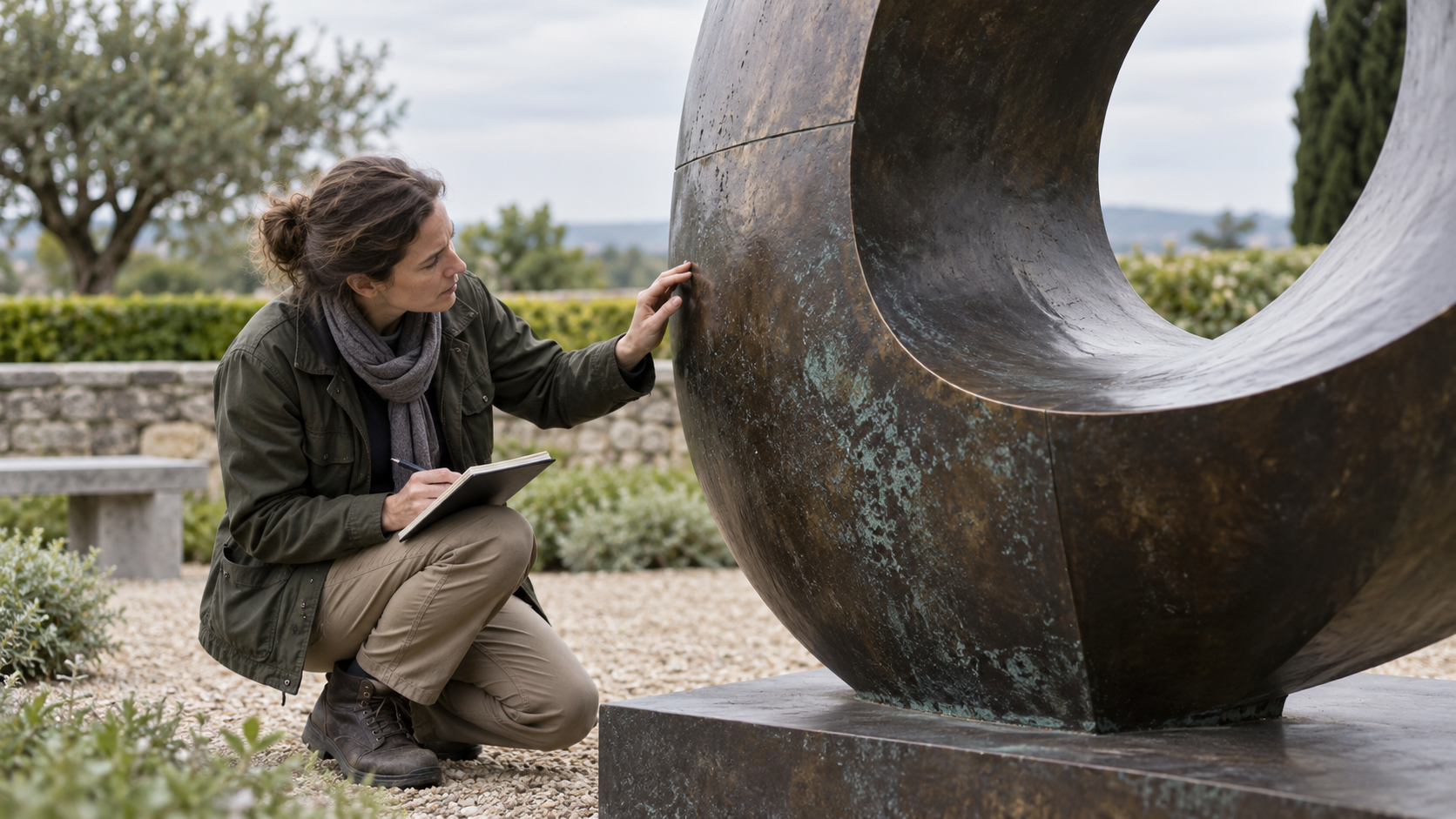
Some color change may be part of an intended patina; another change may signal deterioration. The distinction can require a conservator who knows the materials and the artist's intentions. CCI's example of a bronze monument describes a care program that included inspection, cleaning and protective-coating maintenance after treatment. The guide cautions that removing corrosion indiscriminately can erase surface detail or expose metal to further damage.
A record makes care possible
A useful maintenance plan names who will inspect the sculpture, how often, and whom to call when something changes. Photograph the surface, joints, mounting and nearby ground from repeatable positions. Record whether a mark is stable, spreading or newly visible. Grounds staff should know which activities around the work could cause harm and how to report an incident.
Sources
- Caring for Outdoor ObjectsCanadian Conservation Institute
- Save Outdoor Sculpture!Smithsonian American Art Museum