
A plant laid against light-sensitive paper can leave a photograph without ever passing before a lens. The plant blocks some of the light; the exposed surface changes around it. The resulting image records a close physical encounter, with the subject briefly occupying the place where its picture will remain.
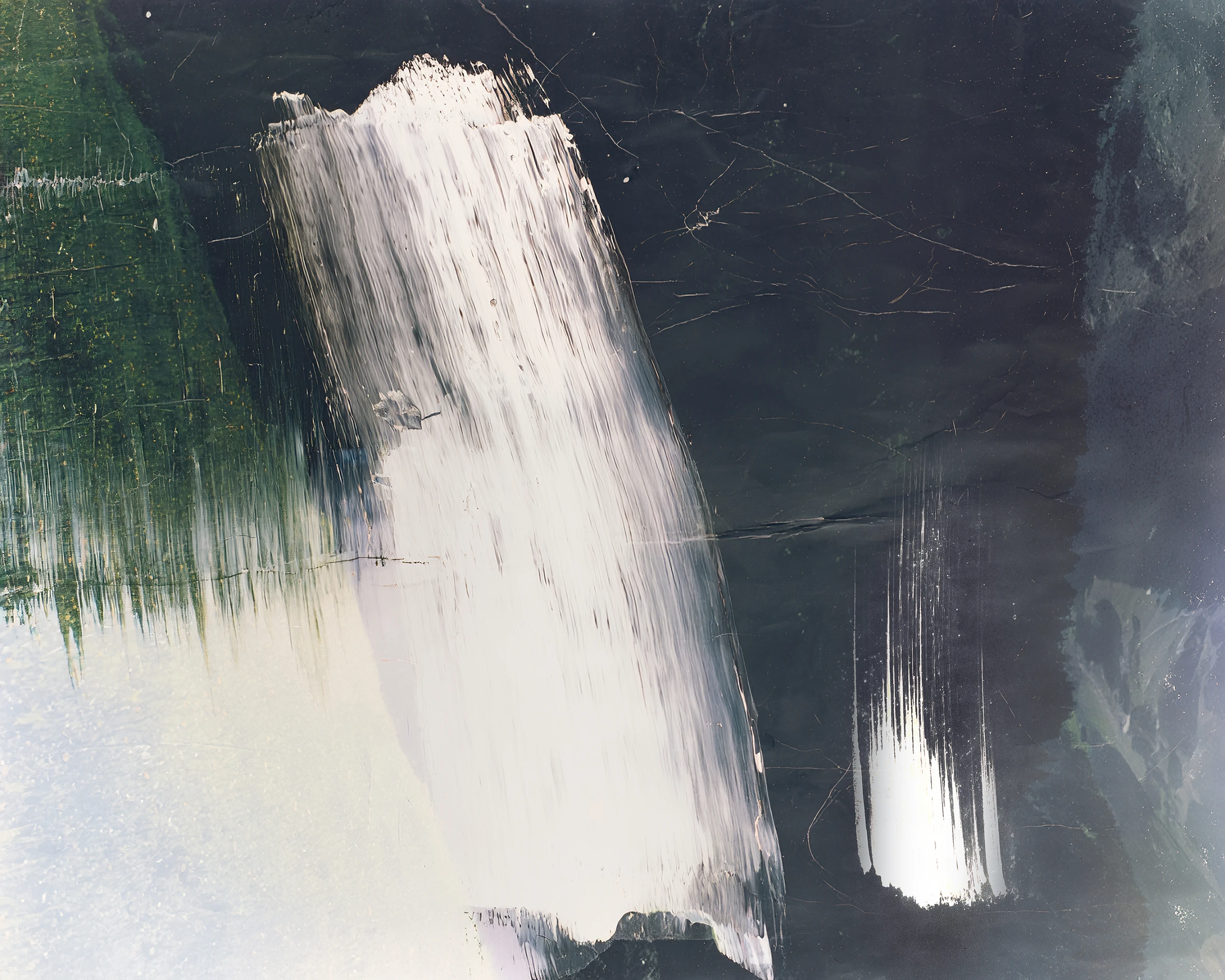
That is a useful starting point for Paris Photo, open to the public at the Grand Palais from November 12 through 15. Its Bicentenary of Photography Path selects a work from each decade across two centuries. Among them are William Henry Fox Talbot’s Asparagus fern, presented by Hans P. Kraus Jr., and Yumo Wu’s Two Winds in a Landscape (2026), presented by Licheng Ling Projects. The distance between them invites a question about how pictures come into being.
Paris Photo identifies Talbot’s work as a photogenic drawing negative. The phrase can sound like an early name for an ordinary photograph, but it directs attention to a particular way of making an image. In his botanical experiments, Talbot placed specimens on chemically sensitized paper and exposed them to sunlight. The Met’s history of his invention describes how the exposed paper darkened while the covered areas stayed light. Today, such cameraless pictures are generally called photograms.
The result reverses a familiar relationship between object and shadow. A leaf’s interruption of the light becomes a pale shape. To look at it is to consider both the specimen and the space around it, where light was allowed to act. Its edges are evidence of an encounter between material, illumination and a prepared surface. Knowing that process changes the picture from a recognizable plant into something more particular: a record of proximity.
Anna Atkins offers a related historical example beyond the works named in this fair’s route. Beginning in 1843, she published installments of Photographs of British Algae: Cyanotype Impressions. The Met’s account describes her placing algae on sensitized paper and exposing it to sunlight. Cyanotype chemistry produces the characteristic blue background. As the Natural History Museum explains, the process uses light-sensitive iron salts and a water wash. The blue is a consequence of how the image is made, rather than a description of the specimen’s color.