
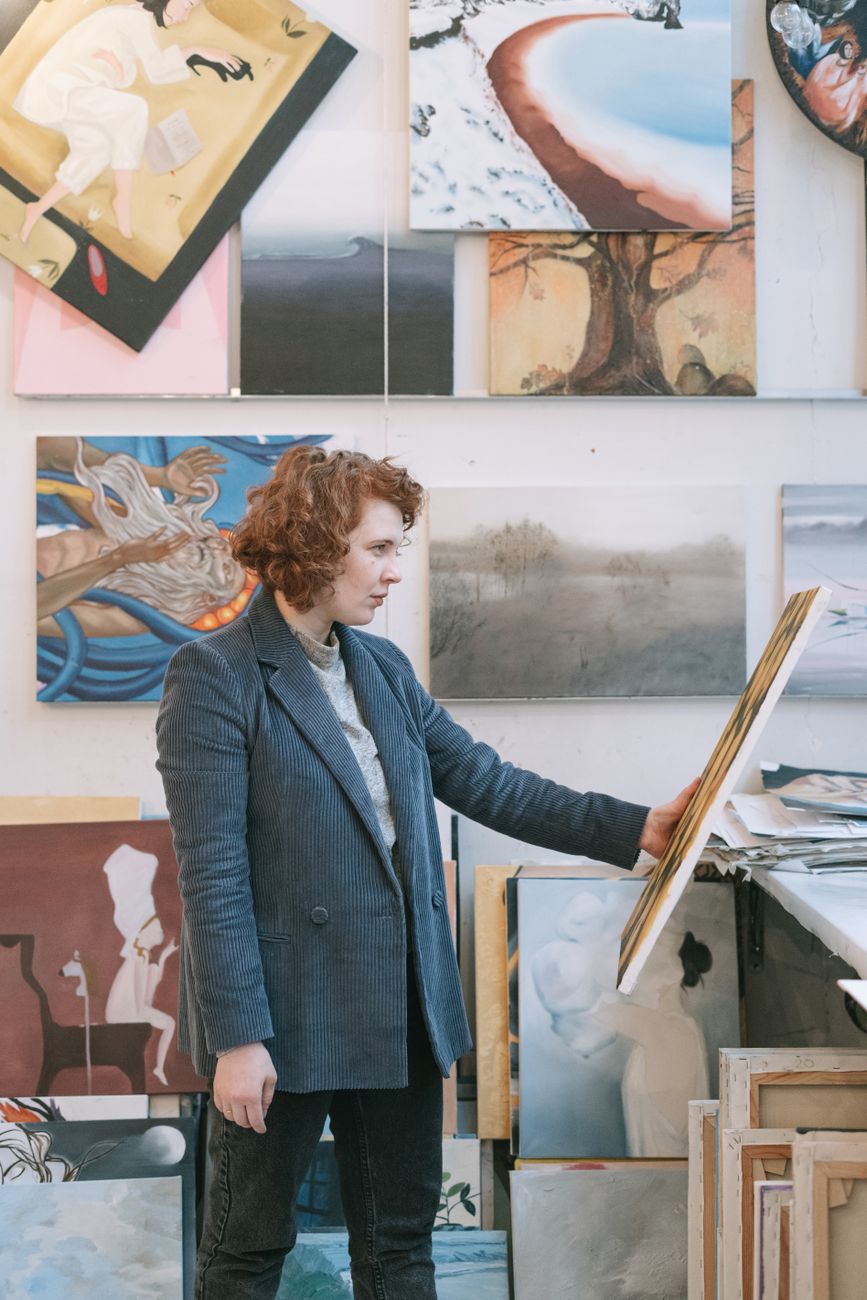
Research the artist in five separate layers: identity, body of work, professional record, market context, and the specific object. Start by confirming that records with the same name actually concern the same person. Build a source ladder that distinguishes the artist’s own biography and CV from independent museum, institutional, gallery, press, or public records. Review enough work to understand recurring media, scale, chronology, and signature practices. Compare prices only across reasonably similar objects and label asking prices separately from reported sales. Finally, return to the listing: artist-level credibility does not authenticate the physical artwork, establish its condition, or prove the seller owns it.
1. Resolve identity before collecting accomplishments
Record the artist’s full name, location, active dates, media, official website, and known professional profiles. Match several details before merging search results. Artists share names; biographies are copied; old gallery pages remain online after relationships end. Getty’s Union List of Artist Names can help with established identities, while an emerging artist may be documented mainly through current first-party and local institutional records.
Search name variants, previous names, and locations. Note rather than erase contradictions. A 2018 biography can be outdated without being fraudulent; an unexplained change in birth year, education, or representation across current pages deserves a question.
2. Build a source ladder
Classify the artist’s site, CV, newsletter, social profiles, and studio interviews as first-party. They are the primary source for how the artist describes their practice, but not independent verification of every career claim. Classify museum collections, public commissions, institutional exhibitions, art-school records, and editorial coverage according to who created the record and why.
A source ladder prevents the common mistake of counting ten pages that all repeat the same biography as ten independent confirmations. The Smithsonian’s provenance resources demonstrate the value of dealer records, correspondence, sales ledgers, inventories, photographs, and exhibition material as different kinds of documentary evidence.
3. Review the body of work
Look across several years when possible. Note repeated materials, dimensions, subjects, construction methods, edition practices, signatures, and how the work has changed. Coherence does not mean sameness; it means development you can trace and differences someone can explain.
Use image search as a lead, not a conclusion. Cropped, mirrored, color-shifted, and unattributed images can produce false matches. Return to original pages and object records.
Sources
- Union List of Artist NamesGetty Research Institute
- A Guide to Provenance Research at the Archives of American ArtSmithsonian Archives of American Art
- What Is Provenance?Smithsonian Institution
- Museum Handbook, Part II: Museum RecordsNational Park Service
- The Art Basel and UBS Global Art Market Report 2026Art Basel and UBS / Arts Economics