
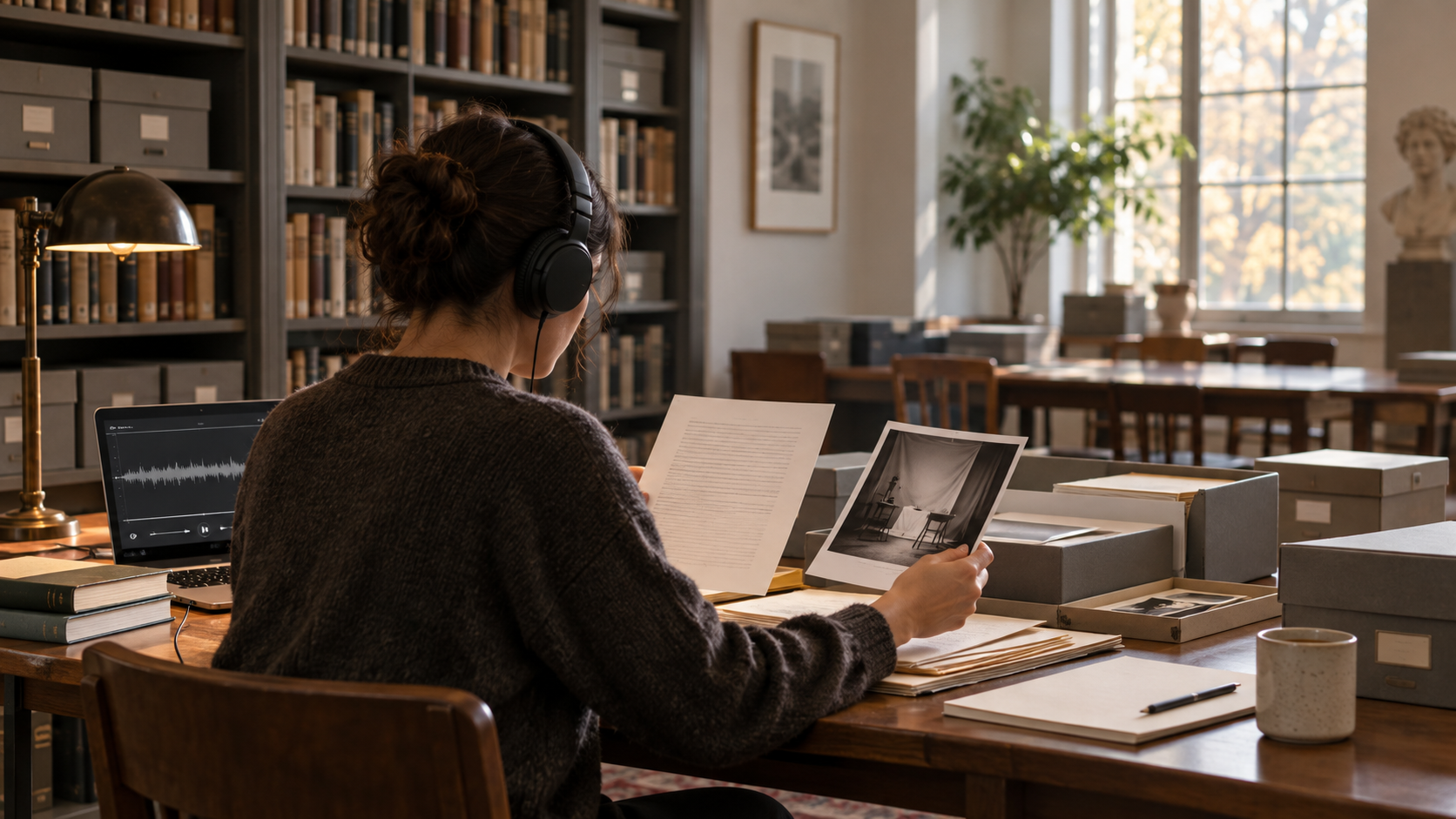
Hearing the practice in the artist’s own words
The Smithsonian’s Archives of American Art has recorded lengthy interviews with artists and other art-world participants since 1958. Its description of the oral-history program emphasizes working methods, technical innovations, patronage and the social setting of a career. These are often the questions a collector has after the invoice and object label have supplied the basic facts.
An interview can explain why an artist returned to a material, what a studio process required, or how a group of works developed. It can also recover people whom the tidy credit line omits: printers, fabricators, assistants, dealers and patrons. The Archives’ Speaking of Art selection pairs audio with transcripts, showing why it matters to hear tone and context as well as read a line in isolation.
A memory is a source, not a certificate
The most useful question is what the speaker actually witnessed. An artist recalling a decade of work may speak from direct experience about a method yet be unsure of the date of one particular example. A collector should not convert an interview about a series into proof of the offered work’s date, edition, signature or ownership. Those claims need object-specific records. Nor should a vivid anecdote outweigh a contemporaneous document without an explanation of the conflict.
Read the interview’s date, interviewer, transcript notes and restrictions. The Archives’ Ad Reinhardt interview record, for example, identifies the recording and warns readers that the transcript is spoken prose that may contain typographical errors. That is a practical reminder to check an audio passage when a particular word carries weight.
Sources
- About the Oral History ProgramSmithsonian Archives of American Art
- Speaking of Art: Oral History SelectionsSmithsonian Archives of American Art
- Oral history interview with Ad ReinhardtSmithsonian Archives of American Art