
A model is not the same as every cast
Bronze makes repetition possible, but it does not make every cast interchangeable. In the Metropolitan Museum of Art’s account of Degas’s bronzes, wax and other studio sculptures were cast after his death under arrangements made by his heirs. The museum distinguishes when a figure was modeled from when a particular bronze was cast. It also describes a system of letters and numbers used to identify individual casts within the group. If a sale listing gives only “Degas, 1890s” for a bronze, it can leave the crucial production history unstated.
The same distinction applies to many living and historic artists, although editions differ greatly. An artist may supervise a foundry closely, authorize later casts, work with several foundries or leave a model that others cast after their death. None of those facts can be inferred safely from the composition alone.
Read the object and the paperwork together
The Met’s study of Frederic Remington’s *Old Dragoons of 1850* shows how much variation can exist among casts of one subject. Remington altered wax models during production, and the museum compared surface details, casting methods and material evidence across known examples. A label naming the composition would not convey those object-level differences.
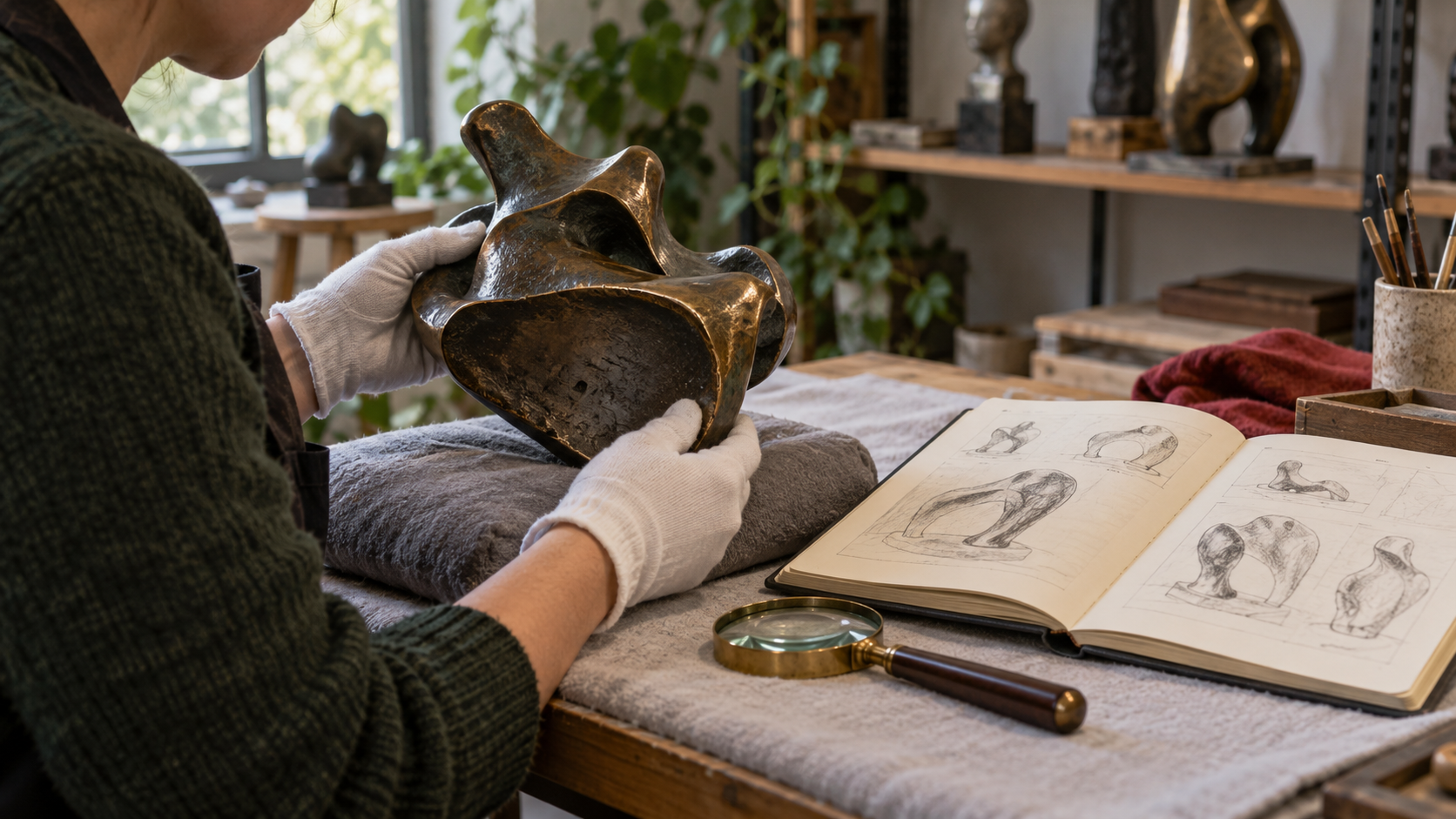
For a work on offer, ask for clear photographs of the entire sculpture, base, underside, signatures, foundry marks, numbers and any join or repair. Request the invoice, certificate, edition or foundry documentation, and any publication that identifies this cast or its recorded state. Compare the dimensions and details with those records. A foundry stamp can support a production account, but it cannot by itself establish when the cast was authorized or whether every other claim in the listing is correct.
The edition number is only one part
The Met’s notes that foundries and cast numbers appear on object labels when documented. That careful qualification matters. Older works can have incomplete or complicated casting histories; some have lifetime and later casts, trial versions or different foundry practices. A simple “3/8” on a sale page is a claim about a particular designation, not a complete history of the edition.
Sources
- The BowThe Metropolitan Museum of Art
- A Closer Look at Frederic Remington's Old Dragoons of 1850The Metropolitan Museum of Art
- Cast in BronzeThe Metropolitan Museum of Art