
What changed, and why?
An artwork can look stable on a wall while carrying a long history of cleaning, repair or structural support. A treatment record tells a future owner what a conservator found, what they intended to do and what was actually done. The Getty’s description standard treats each treatment as a separate event and records its description, type, agent, date and place where known. That sequence matters because one intervention may have been followed by another decades later.
Read the record for the problem that prompted the work, the evidence observed before treatment, the options considered and the reasons for the chosen intervention. Then identify the materials and processes used. If the object was cleaned, ask which surface was cleaned and how far the work went. If a support was repaired, find out which part was altered. A short invoice line saying “restored” does not provide those answers.
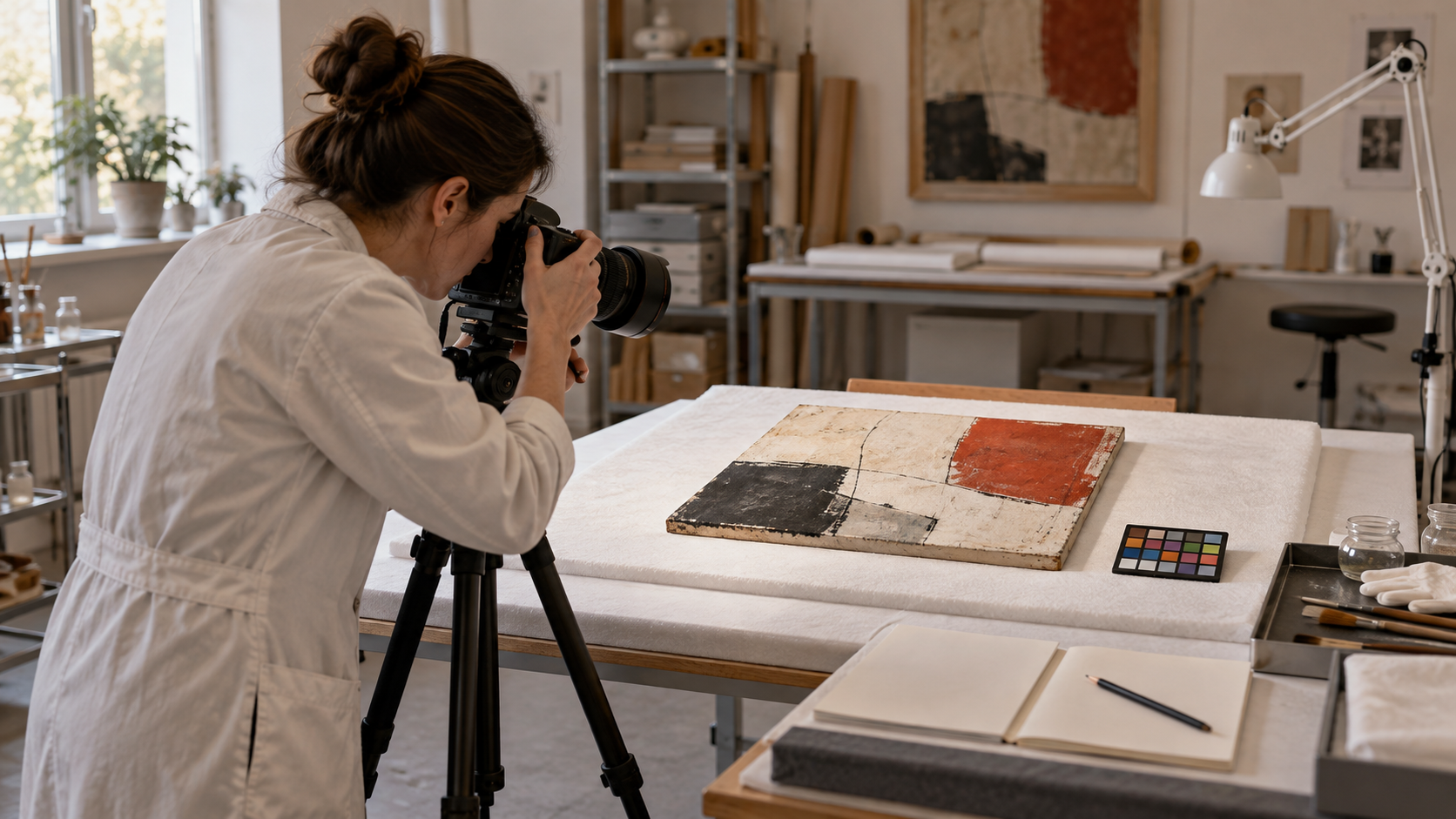
Photographs carry part of the history
Written observations become much more useful when tied to dated images. The Getty Conservation Institute’s Herculaneum project documents decorated surfaces before, during and after treatment, and uses graphic and photographic records to track previous interventions and later change. A private collector may not receive a museum-scale file, but overall views and close-ups of affected areas can still show what an intervention addressed.
Ask whether the images depict the same object, when they were made and what each image is meant to show. Keep the originals with the written report, not merely a selected before-and-after pair. The intervention might have improved stability without making every visual change disappear; a photograph alone does not explain the conservator’s judgment.
Sources
- Getty, Conservation/Treatment HistoryGetty
- Getty Conservation Institute, Documentation of Decorated Surfaces in the TablinumGetty Conservation Institute
- Condition Reporting – Paintings, Part ICanadian Conservation Institute