
Look closely at the margin
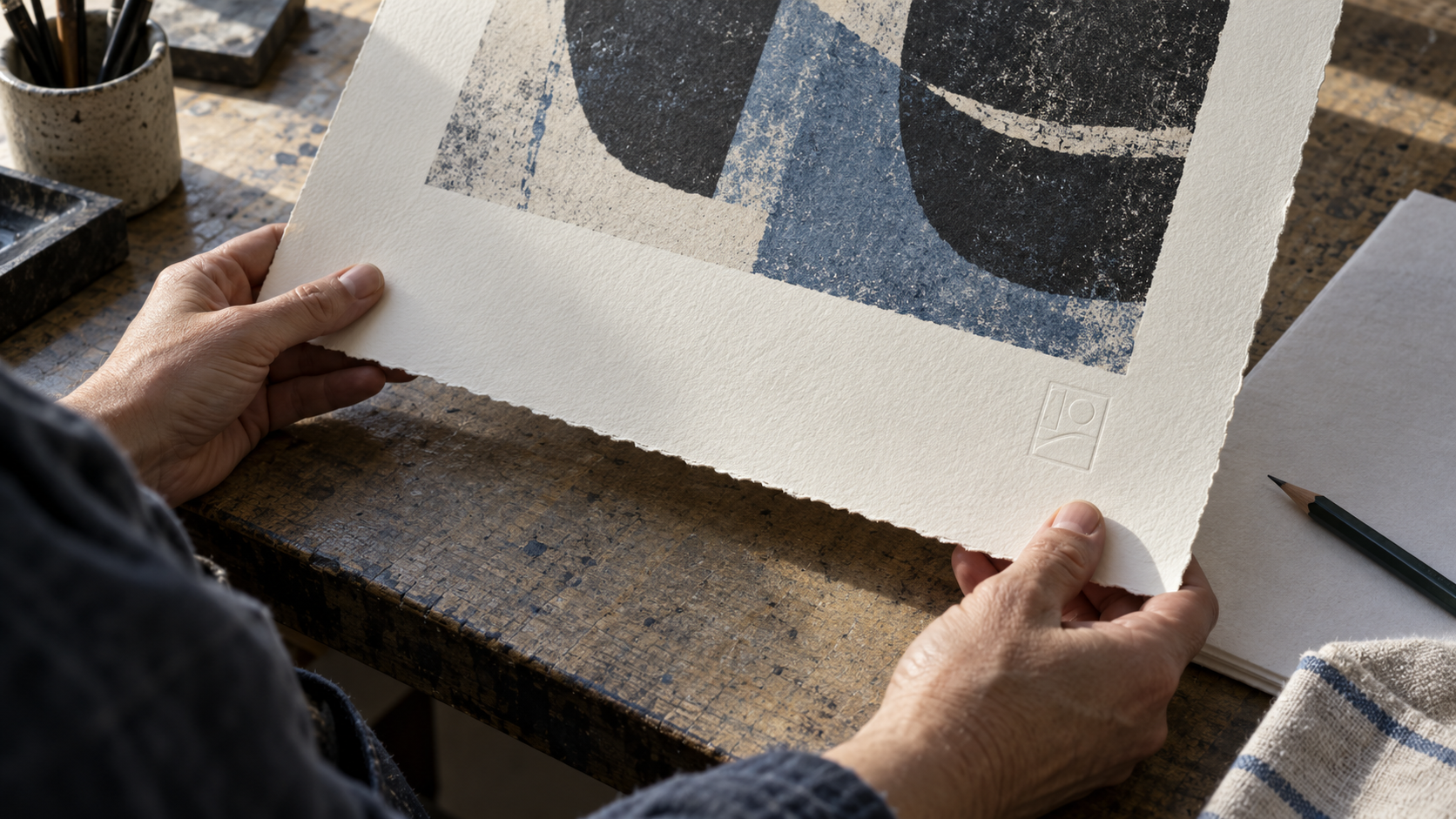
An embossed symbol can be easy to miss in a listing photograph. It often appears in the paper margin, catches light only at an angle, and may be recorded as a “blind stamp” or “chop” in a museum entry. Because the mark is small, a seller may ask it to carry a very large claim: that the print is authentic, came from a certain edition, or was approved by the artist. The mark is more useful when read as one part of the print’s production record.
The National Gallery of Art’s record for Ed Ruscha’s *Yo* describes two distinct embossed marks: a Tamarind symbol and a printer’s chop. The same entry separately identifies the artist, the printer Erica Gutenschwager, the publisher Tamarind Institute, the numbered edition, Ruscha’s graphite signature and the paper. Its record makes the key distinction visible: a workshop mark is not the edition number, the artist’s signature or the whole object description.
Another National Gallery record for a Dan Flavin print identifies a Crown Point Press chop, a separate stamped printer credit on the reverse, graphite inscriptions and a paper watermark. Those details are not interchangeable. Each helps answer a different question about who printed or published the work, which sheet is being described, and how it relates to the edition.
A mark is a clue, not a verdict
A chop can point to a workshop’s participation, but its presence does not, on its own, establish when a particular sheet was printed or whether every other description in a sale listing is correct. Nor should an absent mark automatically condemn a print without checking the edition’s documented practice. Proofs, variations and later printings can carry different inscriptions or markings. The proper comparison is with the specific work and state, not a generic rule about all prints.
Approval is a separate question. The Met’s discussion of Ruscha’s working proofs distinguishes sheets bearing instructions and adjustments from final proofs marked B.A.T. (“good to print”), which served as references for printing an edition, and artist’s proofs outside the numbered edition. That example shows why a workshop chop should not be read as a substitute for evidence of an artist-approved final state.
Sources
- Dan Flavin, 6 — Object RecordNational Gallery of Art
- Ed Ruscha, That is Right — Working and Final ProofsThe Metropolitan Museum of Art
- Ed Ruscha, Yo — Object RecordNational Gallery of Art