
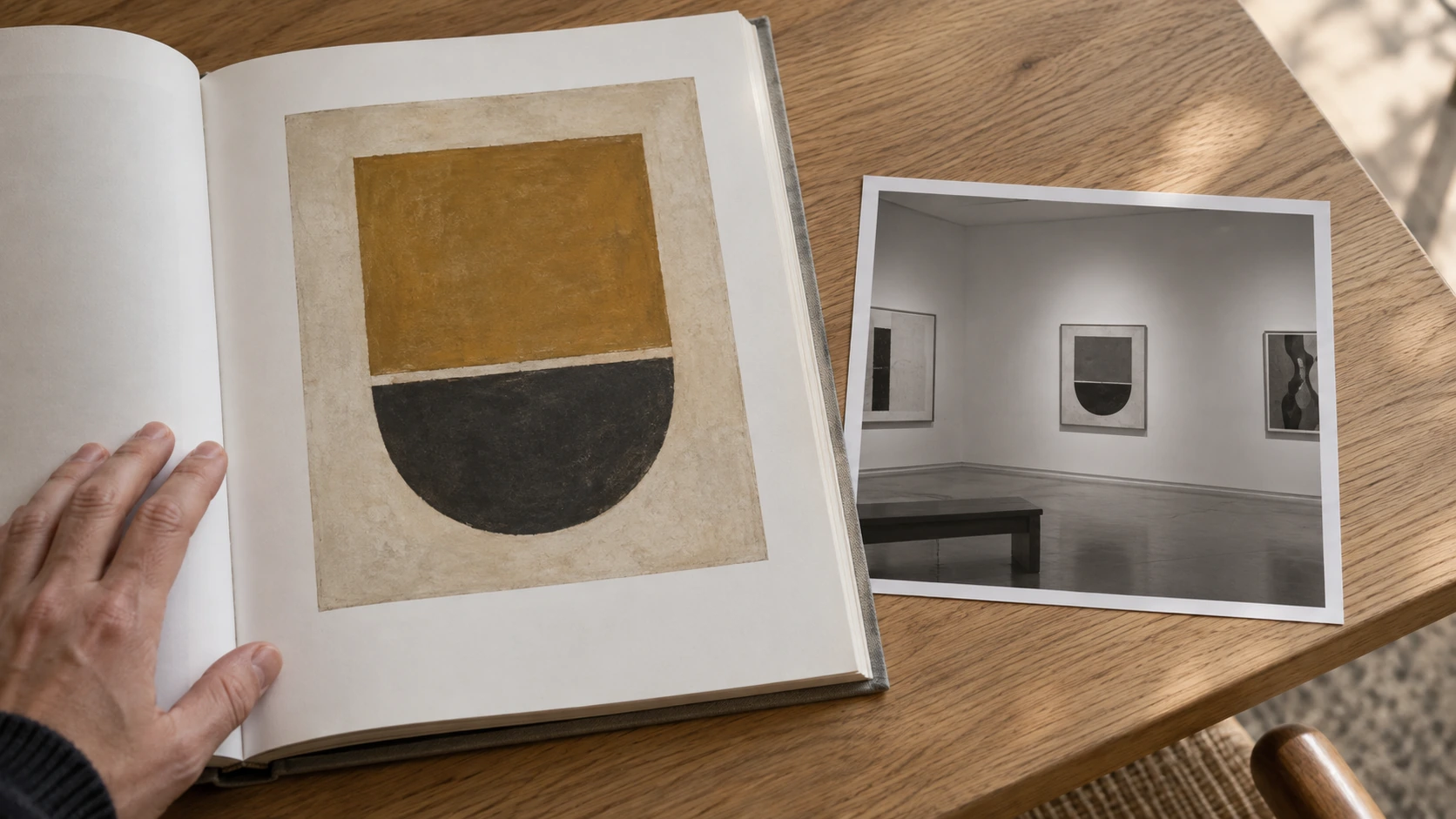
The publication is a record of a claim
A collector researching an artwork may find a catalogue page with an image, title, date and paragraph of interpretation. It is tempting to shorten that discovery to “museum exhibited.” Sometimes that is right. But an exhibition book can discuss works related to a show, reproduce comparisons, or present a broader scholarly argument. The page alone must be read for what it actually identifies.
The Metropolitan Museum of Art's Seurat's Circus Sideshow exhibition page illustrates the records' different jobs. It offers an exhibition overview, selected objects, a complete object checklist and a separate catalogue. The book gives context; the checklist is the more direct place to test whether a particular object was included. If the claim is about a specific copy of an edition or a particular drawing, match more than the artist and title: look for dimensions, lender, collection number, catalogue number or an image that resolves the exact object.
The National Gallery of Art's notes to readers of its collection catalogues describe exhibition histories as records of paintings' presence in special exhibitions and individual loans. They include catalogue numbers when available and note whether a painting was reproduced. Those are separate fields because appearance in a publication and presence at an exhibition are not identical facts.
What an entry can add
An entry may be valuable even when it does not settle the display history. It can preserve an older attribution, a former title, a dated interpretation, a bibliography or a photograph that helps trace how a work was understood. Its author, institution and date tell the reader who made those claims and when. A later collection record or revised catalogue may narrow, correct or supersede some of them.
That makes the entry especially useful when a listing supplies only a thin description. It can give the buyer specific questions to ask: Is the work in the sale the same object illustrated? Does the catalogue describe this physical copy or another from the same edition? Is the cited exhibition number actually attached to this object? A seller should be able to identify the precise reference being claimed, rather than rely on a general association with the artist's exhibition.
Sources
- Notes to the Reader: Exhibition HistoriesNational Gallery of Art
- Seurat's Circus Sideshow exhibition pageThe Metropolitan Museum of Art