
The journey starts before the crate
A visitor sees an artwork in another museum and perhaps reads a short loan credit. Behind that line is a decision about whether the object can safely travel. A conservator may examine it, identify vulnerable areas, and set requirements for handling, display and movement. The Canadian Conservation Institute’s guidance on painting condition reports says that a report can indicate whether a painting and frame are stable enough for loan and highlight restrictions on handling, packing or storage.
That record matters because the borrower needs a baseline. A later observation is meaningful only when it can be compared with the work’s condition before the trip. The same CCI guidance describes condition reports by both lending and borrowing institutions, including during a travelling loan, to document changes or new damage. It is a chain of observations rather than one final form.
The package is designed around the object
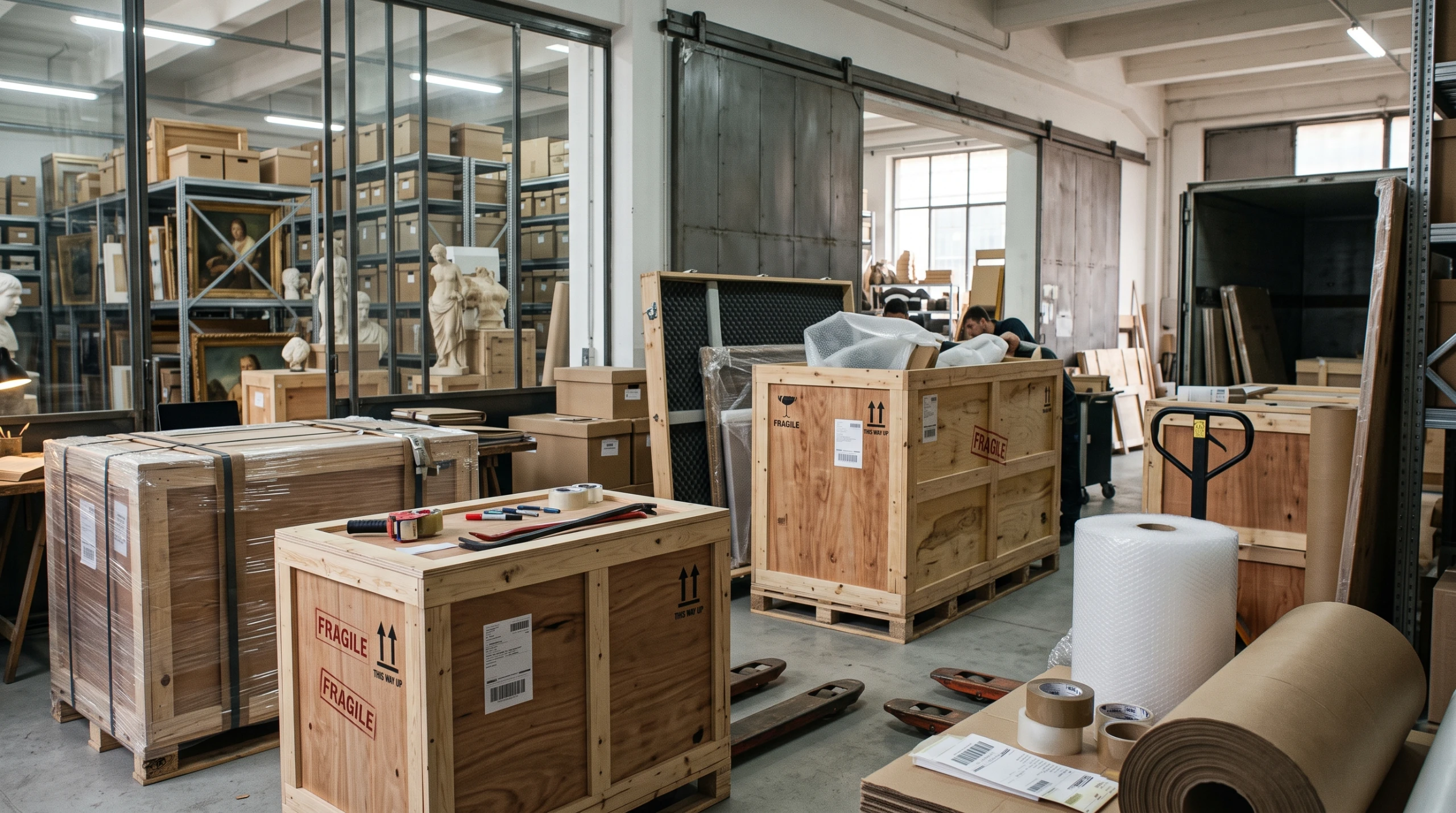
The size, construction and vulnerabilities of a work shape its route. CCI’s travel considerations for paintings discuss travel fitness, framing and backing, wrapping, cushioning and packing before collection by a shipper. Its safe-shipment guidance begins with information about structure, materials and condition, then considers how primary packing and a transit mount restrain the object. A generic box is not a conservation plan.
The economics can be substantial even when no artwork is bought. The National Gallery of Art’s National Lending Service describes direct loan costs that may include matting, framing, vitrines, climate and waterproofing measures, crating, handling, transportation, couriers and insurance. Its public description concerns a specific program; it illustrates the range of practical work rather than a universal fee schedule for every lender.
What the borrower must preserve
Arrival does not end the paperwork. The object is checked against its prior condition record, then installed under the agreed requirements. Another check may follow deinstallation before the return journey. If a change appears, the cumulative record gives the institutions a basis to describe when it was observed and what response is needed. For a travelling exhibition, that handoff can repeat at each venue.
The collector’s lesson is about stewardship, not borrowing a museum’s entire process for a home move. Photograph an artwork before transport, keep its identifying and condition records together, and agree in writing on packing, insurance and responsibility at each handoff. An exhibition loan makes visible a simple principle: movement is an event in an object’s history, and the record of that event can matter as much as the route itself.
Sources
- Condition Reporting – Paintings, Part ICanadian Conservation Institute
- Five Steps to Safe ShipmentCanadian Conservation Institute
- National Lending ServiceNational Gallery of Art
- Paintings: Considerations Prior to TravelCanadian Conservation Institute