
A fired object is not automatically a sturdy one
Ceramics can look durable because the clay has been fired, but a ceramic artwork may combine a brittle body, a fragile glaze, unfired or painted decoration, and separately attached parts. The Canadian Conservation Institute's collection guidance describes wide variation in fabric, firing and surface finishes. Its central risk for ceramics is physical force: a knock can chip an edge, break a projection or expose an old repair.
That changes the collector's first question from “Where would it look best?” to “Where can this particular object sit securely?” A flat-footed vessel and a top-heavy sculptural form are different display problems. A narrow shelf, a passing shoulder and a wobbly pedestal can matter more than a room's ambient light. A display support should stabilize the actual shape without pressing on a weak rim, foot or applied detail.
Look at the joins and the surface
Handles, spouts and modeled ornaments may have been attached to an already formed body; their joins are especially exposed to damage. An old repair is part of an object's history, but it can also be a weak point. CCI advises documenting signs such as glue lines, fills and overpainting. For a collector, condition photographs should include the underside, attachment points and any areas that have been restored, not just the most flattering front view.
The surface needs its own assessment. Decoration over a glaze or paint applied after firing can be more vulnerable than decoration beneath a glaze. Dusting means handling, and cleaning can damage a porous, low-fired or unstable surface. The CCI's care note warns that even apparently ordinary washing can destroy some low-fired ceramics. A buyer should not assume that a domestic cleaning routine is safe for a work whose materials and treatment history are unclear.
Make the display decision from the object outward
Choose a location away from casual traffic and vibration. If the form cannot stand safely on its own, commission a support fitted to the object rather than forcing it onto a generic stand. Handling should be kept to a minimum, and nobody should lift a ceramic by a handle or protrusion. CCI recommends studying condition before moving an object and supporting it with both hands; its note also cautions against gloves for ordinary ceramic handling because they reduce grip.
Most stable ceramics tolerate normal museum environmental conditions, but that is not a universal rule. Porous or salt-contaminated ceramics, composite works and objects with old adhesives may respond differently to water and changes in humidity. A collector does not need to prescribe a humidity target from an article. They need to identify a suspected problem and seek object-specific conservation advice before choosing a case, mount or cleaning method.
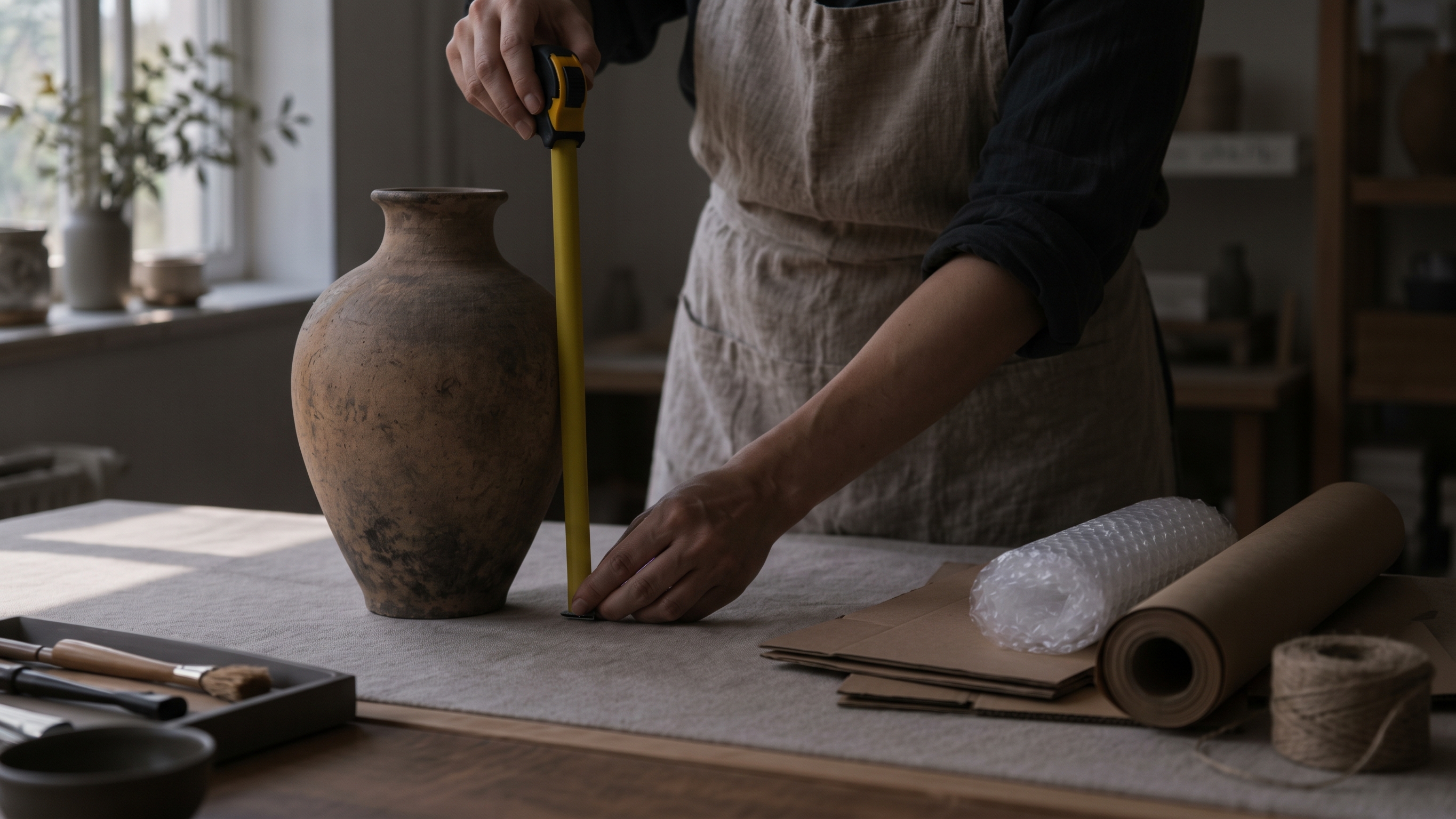
A thoughtful display plan can be short: a condition record, the object's weight and dimensions, the points that can safely take support, a stable location, and instructions for moving it. If any of those facts are missing, pause the installation and ask the seller, fabricator or qualified conservator. The aim is to let the work be seen without making its most fragile features carry the risk.
Sources
- Care of Ceramics and GlassCanadian Conservation Institute
- Caring for ceramic and glass objectsCanadian Conservation Institute